Strategic Analytics made simple

Strategic Analytics made simple

Turning GA4 and GTM Data into Actionable Charts

Your website is a goldmine of data, but without the right tools, it can feel more like a dusty vault. Google Analytics 4 (GA4) and Google Tag Manager (GTM) collect the crucial Key Performance Indicators (KPIs), but getting them into a format for quick, meaningful analysis and reporting can be a headache.

If your business is on a budget, but your need for analytics isn’t, this is a great way to have a big win for your business, and your budget.

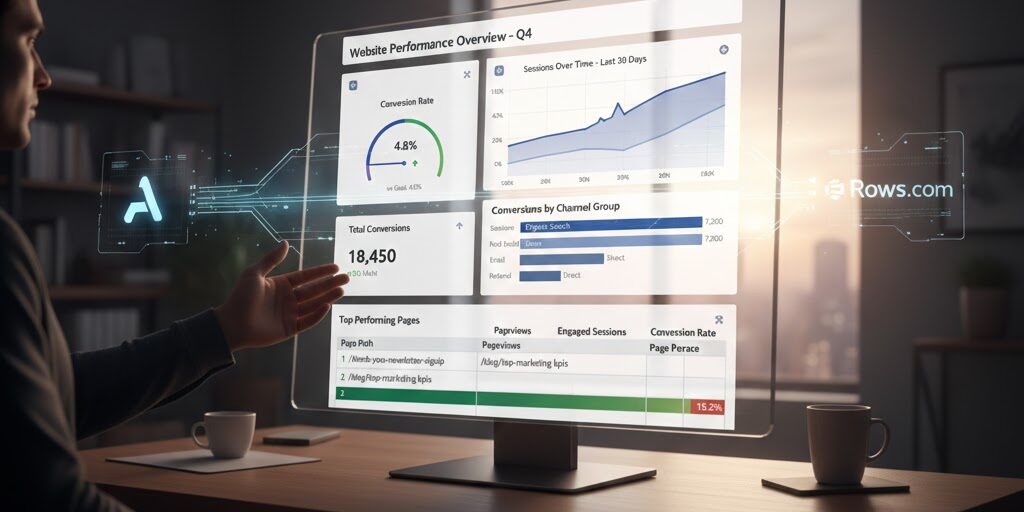
By using some great free/paid tools with your current (hopefully) Google tools such as Analytics and Tag manager. A great new tool you should include in your tools is Rows.com, a spreadsheet creator that connects directly to your data sources.

In this post, we'll walk through a powerful, no-code workflow to pull your KPIs from GA4 (and the GTM-fueled events that enrich it), evaluate them in Rows, and build beautiful, shareable charts.

Defining and Capturing Your KPIs with GA4 & GTM

Before you can chart your data, you need to make sure you're tracking the right things.

GA4 is event-based, meaning every user action—from a page view to a purchase—is an event. GTM is your essential deployment tool for managing these events. If you need help setting up your Google Tag manager and setting up a few events, contact us.

The GA4-GTM Synergy

The Google partnership is so connected that smooth transitions between the two create reports that are nothing short of genius and productive for your marketing growth. GA4 is where your data lives and is processed. It tracks your fundamental events automatically via Enhanced Measurements. Events such as page_view, scroll, and first_visit. GTM on the other hand is your main control center for customizing and tracking events that define your necessary KPIs such as a form submission or a download click. GTM’s triggers and event GA4 event tags are used to push your data into your GA4 property.

For example: You would create a custom event trigger in Google Tag Manager to track your newsletter sign ups, this fires a Google Analytics 4 tag. This in turn becomes the metric you use in GA4.

Now that you have relevant information, you need to have a way to put it in a format where you can read it, manipulate it, and put it in charts.

Retrieving Your KPI Data with Rows.com

Now let’s get started with Rows.com by treating your favorite tools as spreadsheet functions seamlessly connecting your GA4 data. This is a much easier way to pull specific data than navigating the native GA4 interface for exports. Let’s look at this step-by-step.

Step 1: Connect Rows to Your GA4 Account

  1. In your Rows spreadsheet, type = and start typing GOOGLE_ANALYTICS_4.
  2. Select the relevant function, like GOOGLE_ANALYTICS_4.GET_REPORT().
  3. You'll be prompted to connect your Google Account. Grant access to your Google Analytics data.

Step 2: Querying Your KPI Data

The beauty of Rows is the ability to easily construct your query. Unlike a manual export, you define the exact Dimensions (how you slice your data, e.g., Date, Page Path, Channel Group) and Metrics (your KPIs, e.g., Engaged Sessions, Conversions, Event Count) you need.

Formula Component Value/Selection Description
Property_ID GA4-XXXXXX Your GA4 Measurement ID.
Start_Date "30 days ago" A dynamic date range.
End_Date "today" The current date.
Metrics ["sessions", "conversions"] The KPIs you want to track.
Dimensions ["date"] Slicing the data by date.
Conversion_Event "purchase" (Optional) Filter for a specific event.

You'll see a small table appear in your spreadsheet, populated with live data from GA4. Set this table to automatically refresh daily, providing a perpetually up-to-date report.

Evaluating, Manipulating and Visualizing Your KPIs

Now your data is in a flexible spreadsheet environment. You can clean, calculate, and transform your raw data into insightful visualizations. Some uses for this information doesn’t stop at knowing what successes and not-so successes you had with your current marketing but possible new product lines, price points, and demographics.

Performing Calculations and Evaluation

Now you can take strategy to a whole new level by combining metrics.

For example, your Conversion Rate is a much more telling KPI than just the raw number of conversions.

If your Rows data table is in cells A1:C31:

KPI Calculation Formula Example Description
Conversion Rate =C2/B2 Conversions (Col C) divided by Sessions (Col B) on a given row.
Percentage Change =(C2-C3)/C3 Compare today's conversions to yesterday's.
Conditional Formatting Built-in feature Highlight cells red/green based on a defined KPI goal.

Creating Useful Charts

Rows offers intuitive charting capabilities directly from your spreadsheet data. Select your calculated data—for instance, the Date column and your new Conversion Rate column—and insert a chart. These charts can be embedded into your Google sheets (automatically, but takes some coding).

What we learned

By strategically using GTM to define and deploy your KPI-related events, retrieving that rich data with the powerful GA4 connector in Rows.com, and using the spreadsheet environment for easy calculation and charting, you move past manual data exports. You gain a powerful, automated, and easily shareable way to monitor the metrics that matter most to your business.

Recommendation

I would like to thank the people at rows.com for putting up such great tutorials. Most of what you read today came from my notes used to set up content for my own clients.  I started years ago with just Google Analytics and as the years progressed Google has consistently made marketing strategy easier and less time consuming. I use the paid version for myself and my clients, but you can try the free version. The paid version is so affordable though, I would just jump right in.

P.S. Since the writing of this article, Rows.com has started to perfect its own AI. Can’t wait to start using it.

Strategic Analytics made simple Read More »

Google Marketing and the use in Chiropractic Marketing

How To: Google Marketing with Google Reviews

How useful was this article

In today's digital world, online reviews are king. They hold immense power, influencing where we shop, eat, and even which doctor we see. When it comes to your business, Google Reviews are a goldmine you can't afford to ignore. But why exactly are they so important, and how do you get more of them?

The Power of Positive Reviews

Think of Google Reviews as virtual word-of-mouth recommendations. Potential customers are constantly searching online, and positive reviews act as a glowing endorsement, building trust and credibility for your business. Here's how they benefit you:

  • Increased Visibility: Businesses with more reviews tend to rank higher in Google searches. This means more potential customers will see your listing, leading to more website traffic and footfall.
  • Boosted Sales: Studies show that customers are more likely to choose a business with positive reviews.
  • Builds Trust: Positive reviews showcase happy customers, giving potential customers confidence in your brand.
  • Improves Customer Engagement: Responding to reviews (both positive and negative) shows you care about customer feedback and fosters a sense of community.

How to Encourage Google Reviews

Now that you know the power of Google Reviews, let's explore how to encourage customers to leave them:

  • Make it Easy: Include a "Leave a Google Review" button on your website and social media pages. You can also create a custom Google review link to share directly with customers.
  • The Right Time: Don't be shy about asking for reviews! The ideal time is right after a positive customer interaction, like a completed purchase or resolved issue.
  • Respond to All Reviews: This shows you value customer feedback, good or bad. Address negative reviews professionally and offer solutions. Thank customers for positive reviews and highlight specific details they mentioned.

Building a Strong Online Reputation

Google Reviews are a powerful tool for building a strong online reputation for your business. By understanding their importance and implementing these strategies, you can encourage more customers to share their positive experiences, leading to increased visibility, trust, and ultimately, more success for your business.

Here are a few of our suggestions:

If you offer your customers a bottle of water, put a QR code on it and stick it on every bottle.

Put business sized cards on the reception desk with a QR code.

Put links on your social media, and so much more.

Jumping into Google Business

Let's take a moment and jump into Google Business. When you have a local business you want to build a local community. Today let's just look at a few things that are new that can help you build your community.

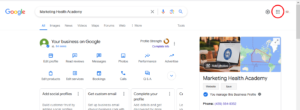
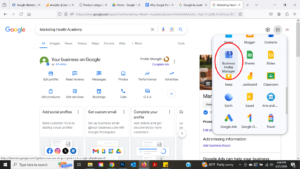
I assume you have a Google Business profile, now called Google Maps. You can find a direct link inside of your Google account.

Finding Google Business in your Google Account. Build your chiropractic marketing with marketing health academy

Google Business inside your Google account


Google Marketing with Google Reviews Read More »

What is strategic marketing for chiropractors.

What is Strategic Marketing for Chiropractors

How useful was this article

What is Strategic Marketing? Your Guide to Long-Term Success

In today's competitive business landscape, simply throwing marketing tactics at the wall and hoping something sticks isn't enough. Companies need a well-defined strategy to ensure their marketing efforts are focused, effective, and drive long-term success. That's where strategic marketing comes in.

Strategic marketing goes beyond the day-to-day activities of promoting your practice. It's about taking a big-picture approach to understand your target market, your competitive advantage, and your overall business goals. This knowledge then informs the development of a comprehensive marketing plan that outlines how you'll reach your target audience and achieve those goals.

Here are some key aspects of strategic marketing:

  • Patient Focus: Strategic marketing places the customer at the center of everything you do. It involves understanding your ideal customer's needs, wants, and pain points. By building a deep understanding of your target market, you can create marketing messages and campaigns that resonate with them.
  • Competitive Advantage: What makes your business unique? Strategic marketing helps you identify your competitive advantage and leverage it in your marketing efforts. We call this "becoming the expert". This could be anything from a superior product offering to exceptional customer service.
  • Goal Setting: Strategic marketing is all about achieving specific goals. These goals could be increasing brand awareness, driving sales, or generating leads. Having clear goals allows you to measure the success of your marketing efforts and make adjustments as needed.

The Benefits of Strategic Marketing

By taking a strategic approach to marketing, businesses can enjoy a number of benefits, including:

  • Increased ROI: Strategic marketing helps you allocate your marketing budget more effectively, leading to a higher return on investment (ROI).
  • Improved Brand Awareness: Strategic marketing helps you build brand awareness and establish your company as a thought leader in your industry.
  • Enhanced Customer Relationships: Strategic marketing allows you to develop stronger relationships with your customers by creating a more personalized and engaging marketing experience.
  • Sustainable Growth: Strategic marketing helps you achieve sustainable growth by attracting new customers and retaining existing ones.

Getting Started with Strategic Marketing

If you're ready to take your marketing efforts to the next level, join Marketing Health Academy for the best in:

  • Conduct Market Research: Understand your target market and the competitive landscape and defining social profiles.
  • Define Your Target Audience: Who are you trying to reach with your marketing messages?
  • Set SMART Goals: Specific, Measurable, Achievable, Relevant, and Time-Bound goals will keep you on track.
  • Develop a Marketing Mix: This refers to the "4 Ps" of marketing: product, price, place, and promotion. Strategic marketing ensures these elements work together seamlessly.
  • Track and Measure Your Results: Regularly monitor your marketing performance and make adjustments as needed.

By following these steps and embracing a strategic marketing approach, you can set your business up for long-term success.

I hope this helps! With a strategic marketing plan in place, you can take your marketing efforts to the next level and achieve your business goals.

What Is Strategic Marketing: Chiropractic Marketing Read More »

Feeling lost in the marketing maze? This blog post is your guide to crafting a winning marketing strategy.

Crafting A Pathway: A Guide to Building Stategic Marketing

Designing your step by step to success

How Useful was this Article

In today's dynamic business environment, having a clear direction is critical to success. This is especially true in the field of marketing, where competition is stiff and audience attention spans are short.. That's where a well-defined guide to Strategic Marketing comes in – your roadmap to navigating the ever-changing marketing terrain. Understanding the rules to a detailed action or an overall plan use essential tools with The Marketing Circle.

What is a Strategic Marketing?

Think of your strategic marketing as a comprehensive plan outlining how you'll achieve your business goals through marketing efforts. It is more than just promoting your products or services; it also includes identifying your target audience, producing a captivating message, and determining the most successful means for reaching them.

Why is a Strategic Marketing Important?

Here are just a few reasons why a well-defined guide to marketing strategy is essential:

  • Clarity and Focus: It provides a detailed pathway, keeping your marketing efforts aligned with your overall business objectives.
  • Efficiency: It helps you allocate resources strategically, avoiding scattered efforts and maximizing return on investment (ROI).
  • Measurable Success: By establishing clear goals and Key Performance Indicators (KPIs), you can track progress and measure the effectiveness of your marketing initiatives.
  • Competitive Advantage: A strong strategy helps you differentiate your brand and stand out from the crowd, attracting and retaining customers.

Building Strategic Marketing:

Crafting a winning marketing strategy involves several key steps:

  1. Define Your Goals: What do you want to achieve with your marketing efforts? Increase brand awareness, generate leads, or boost sales?
  2. Know Your Audience: Who are you trying to reach? Understanding their demographics, needs, and pain points is crucial for crafting relevant messaging.
  3. Competitive Analysis: Research your competitors, their strengths and weaknesses, and how they position themselves in the market.
  4. Develop Your Value Proposition: What makes your brand unique and valuable to your target audience? We call this “Becoming the Expert”
  5. Choose Your Marketing Channels: Identify the channels where your target audience spends their time, be it social media, email marketing, content marketing, or a combination of these.
  6. Craft Your Message: Develop compelling messaging that resonates with your audience and highlights your value proposition.
  7. Set Measurable Goals and KPIs: Define specific, measurable, achievable, relevant, and time-bound (SMART) goals to track your progress.
  8. Monitor and Adapt: Regularly analyze your marketing performance and adapt your strategy based on the data you gather.

Remember: Your strategic marketing is not static. As market trends evolve and audience behavior changes, so should your strategy. Continuously monitor, analyze, and adapt your approach to ensure lasting success.

By investing time and effort into crafting a strong marketing strategy, you can increase your chances of achieving your business goals and navigating the ever-changing marketing landscape with confidence.

March 2026
S M T W T F S
1234567
891011121314
15161718192021
22232425262728
293031  

Crafting A Pathway: Guide to Building Strategic Marketing Read More »

Chiropractic Digital Marketing in 2024

Chiropractic Digital Marketing in 2024

Happy New Year!

How useful was this article

We will soon have completed another year. The last twelve months have seen remarkable transformations. Although it has introduced some new issues, AI has simplified all of our company initiatives. Search engine optimization and website evaluation have been revolutionized by GA4 (Google Analytics). While producing unforeseen outcomes in our statistics, Tag Manager has become the new lingo.

We are even rewriting and revising "The Marketing Circle" here at Marketing Health Academy to reflect these shifts. Education pods, the product of our dedicated team's labor, are scheduled for release in 2024.

Here are some pointers to assist your chiropractic clinic in preparing for the new year, as well as some items that have become standard in chiropractic marketing.

  1. AI Becoming the Norm:
  • AI-powered tools are now commonplace in various aspects of digital marketing, including content creation, personalization, and analytics. This trend will likely continue, with even more sophisticated and user-friendly AI solutions emerging.
  • Businesses need to embrace AI to stay competitive and leverage its power to automate repetitive tasks, gain valuable insights, and personalize user experiences.
  1. Google Analytics Growth:
  • Google Analytics remains the dominant platform for website traffic analysis. Its continued growth indicates its relevance and value for businesses seeking to understand their online audiences and optimize their digital campaigns.
  • As Google Analytics evolves, it's crucial for businesses to stay updated on its features and learn how to utilize them effectively to extract the most valuable insights.
  1. SEO Beyond Websites:
  • Successful SEO now extends beyond traditional website optimization and encompasses a wider digital landscape. This includes social media optimization, local SEO, and even voice search optimization.
  • Businesses need to adopt a holistic SEO strategy that considers all relevant online channels and touch-points to reach their target audience effectively.
  1. AI in Blogs and Social Media:
  • AI will play an increasingly significant role in content creation and management for blogs and social media platforms. This includes tools for automated content generation, audience analysis, and social media scheduling.
  • Businesses can leverage AI to create engaging content, optimize their social media presence, and reach new audiences with greater efficiency.
  1. Google Analytics and Tag Manager Integration:
  • Google Tag Manager (GTM) will become increasingly integrated with Google Analytics, allowing for more streamlined data collection and analysis. This will provide businesses with a more comprehensive and unified view of their online performance.
  • Businesses should consider implementing GTM to simplify tag management, improve data accuracy, and gain deeper insights from their Google Analytics data.
  1. Business Goals and Website Optimization:
  • The effectiveness of Google Analytics and other digital marketing tools depends heavily on aligning them with your specific business goals and website objectives.
  • Before implementing any digital marketing strategy, it's crucial to clearly define your business goals and then choose the tools and techniques that best align with achieving them.

Overall, the digital landscape is constantly evolving, with AI becoming increasingly integrated into various aspects of online marketing. By understanding these key trends and adapting your strategies accordingly, businesses can stay ahead of the curve and achieve their digital marketing goals effective

My recommendation is that you conduct a comprehensive assessment of your website's content, including new keyword research and SEO, at the conclusion of each year. I expect the same thing this year. Reach out to our staff and we will begin reviewing your website immediately.

Subscribe

* indicates required

Chiropractic Marketing in 2024 Read More »

Chiropractic Marketing - Service Based Demographics

The Significance of Demographics

Part One - Service-Based Demographics

How useful was this article

As you begin your annual marketing plan, notice that demographics has its very own section, or tab, within your marketing plan worksheet (download here). Why is demographic information so important in marketing that it has its own dedicated section? The simple answer is, you want to target an audience with a need that you can meet. The long answer is a little more complicated.

There are numerous questions to be asked in order to define a demographic that will help you, and your audience, achieve the ultimate goal of connecting. First, you need to determine the existence of a need. You also need to consider if there are products or services in your toolkit that are more valuable than others, and how they are meaningful to your target audience.

This is part one in a four-part series on demographic marketing for chiropractors. In this first article, we will focus on finding the best audience for each of your products or services.

PRODUCT/SERVICE CENTERED

It is critical to understand your target consumer's interests in order to effectively market your product/service. Let's talk about how we can define a product/service from the perspective of your target customer.

Unless they are an avid walker, or have a grandchild who really wants a pair of high-end sneakers, you likely are not trying to sell high-end sneakers to an 80-year old. In this scenario, a person who may be on a fixed income most likely would not be looking to spend a significant amount of money on sneakers. Understanding your audience and their needs is key. You'll look for a more suitable target audience to market high-end sneakers too.

Perception is a powerful marketing tool. Sometimes your product/service must be perceived as the simple solution to a complex problem. Trust is also a key factor. You need your audience to trust your product or service. You can begin to see that it is necessary to cover all possible solutions your product/service can provide as you work to define your demographic.

In most cases, you will actually have multiple end users. You can absolutely offer your product or service as solutions to various problems. Listing important features of your product/service. If the end result is a benefit or solution to the problem, you have created a product-based demographic.

Now think about where you would employ a product-based demographic. When posting an ad, most advertising platforms allow you to select various demographic options. If you've done your homework, you will find the selection process to be fairly easy.

This year we're talking about automation. You can most certainly employ automation in your communication, and still build trust. Social media is an excellent tool for fostering communication, and therefore trust. However, you may not always be able to select demographics when posting on social media.

In our marketing strategies, we have defined the purpose for social media as a communication builder. We can create demographic specific posts for social media and utilize #hashtag marketing to reach the target. Let's examine this a little closer.

Take knee injuries for example. Think about what services you provide for injuries related to sports injuries, or even a vehicle accident related injury, etc. Now break this down even further by defining services that are related by season. In December, you may see more ski/snowboarding related knee injuries. In the Summer you may see knee injuries stemming from running or soccer. (We will talk more about demographics based upon people in a later article, but for now we would look at what you can do for a knee sprain.)  In the winter, you would launch a social post with the hashtags #winter #wintersports #skiing, etc. Some hashtags are service based, such as, #massage or #kneemanipulation. When in doubt, do some A/B testing on your social platforms and see what garners the most interest.

When building ads for PPC on various platforms (ie Google), choosing your demographic is an integral part of the process. When you have defined the demographic for a specific product or services you can guarantee that the correct target is being reached, increasing your odds of ROI success.

Your overall success depends on clarifying your demographics before you start spending time and money on promotions. If in doubt turn to your detailed Key Performance Indicators and tweak as necessary. That is what makes Agile marketing so successful.

Subscribe

* indicates required

The Significance of Demographics – Part 1 Read More »

Scroll to Top